

Buenos Aires, Again
4 February, 2008, 04:59 am in "Argentina"
 We gave ourselves several days in Buenos Aires to finish up things before flying to Europe. This consisted of visiting a few museums, doing research (about our next destinations) and taking a trip to Tigre on the river delta.
We visited the Bellas Artes museum in Recoleta, which contains a number of paintings by famous painters including Goya, Picasso, Gaugin, and Degas, as well as some interesting collections of Argentinian and South American artists. There were also a couple exhibits on design and some sculptures.
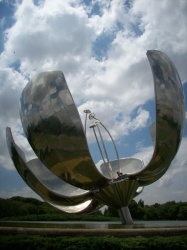
After that we wandered through the handcrafts market and the Buenos Aires Design Center which had cool but expensive art and functional items including a fabric chicken in a take-out box plastic bag holder. We stopped by the Ice Palace Gallery then walked past the Rose Sculpture, a giant metal petaled sculpture of a rose in a pool of water (looked more like a water lily to me). The petals open at sunset and close at sunset.
Next we visited the Condor Wasi museum, a ceramics museum that is only open for a few hours on Saturday and was closed for vacation when we tried to visit it before. Here we finally saw Argentinian ceramics with the bird designs we'd seen on various contemporary souvenir items.
One morning we visited the Botanical garden, a shady park filled with various trees and an uncanny number of cats.
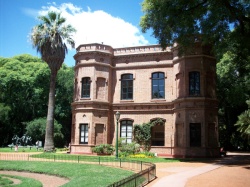
There were several greenhouses with more plants but I think you can only visit them with a tour since they were closed. The garden had copies of various famous statues as well as plenty of benches.
As we left I noticed a sign asking people not to abandon pets in the garden, which explained the cat colony living there.
Later we took a walk to the ecological reserve that runs along side Buenos Aires next to the river. The sun was blisteringly hot, but fortunately there were benches shaded by trees.
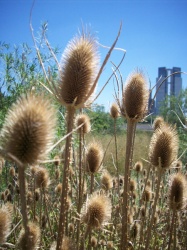
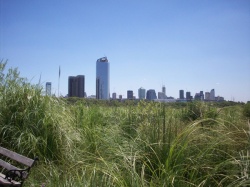
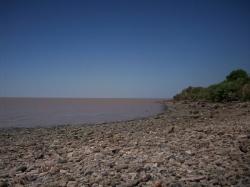
The paths circled a marsh which was filled with birds. The paths led us to the banks of the river which we had once unsuccessfully tried to find from the city center but got stuck behind the working harbor. The river was smelly and brown with a beach covered with trash. We quickly returned to the path and headed back to town.
Mendoza: Flooding in the Land of the Sun
31 January, 2008, 04:14 am in "Argentina"
 It was pouring rain when we arrived in Mendoza. And I mean pouring to such a point streets were flooding. As we were greeted by hostel and hotel touts, I had to admire the irony of the flyer one handed to me, "Welcome to Mendoza, Land of the Sun"
We had left Valparaiso at 7:15 AM and were soon crossing the Andes for the third time.
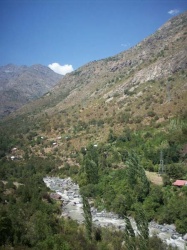
The foothills contained an interesting combination of of evergreen trees, deciduous and cacti.
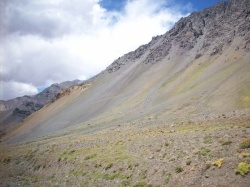
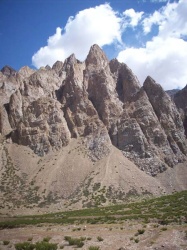
Higher up the trees disappeared and we saw dry rocky peaks with an occasional waterfall plummeting from high up above us.
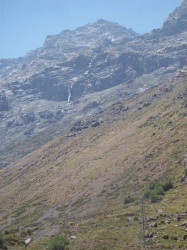
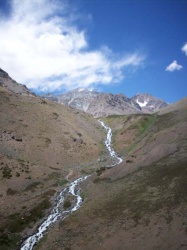
The road ran within view of train tracks and Rowshan wondered if we could have gone by train. The question was answered a few minutes later as we saw the train tracks suspended over a washed out area, adorned with boulders from a rock slide.
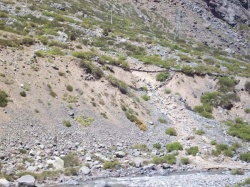
I don't know how long we were at the border because I fell asleep while the bus was waiting.
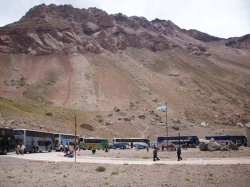
It was a long time. Eventually we were able to get into Argentina. We saw some snow capped mountains but South America's highest mountain was hidden from view.
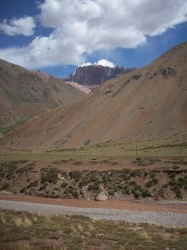
As we descended the landscape became greener and we saw more agriculture: vineyards, olive trees, and farms. It also began to rain.
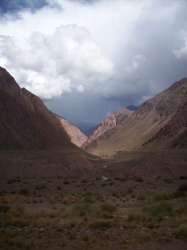
Our original plan was to go hiking in the surrounding mountains. With the torrential rain, we scrapped this idea and wondered if we'd even be able to walk in the streets. As we drove through town, we passed cars stuck in intersections which had become lakes and pedestrians wading across the streets with bare feet and pants rolled up to their knees.
The next day, by the time we got going, it was pouring again. Fortunately in the afternoon the rain stopped and we were able to walk up Gloria Hill, a park with monuments to the Army of the Andes and a great view of the city and its surroundings.
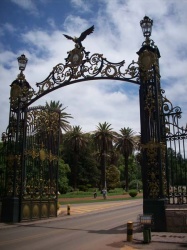
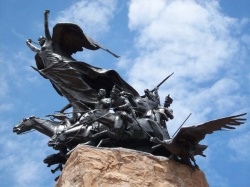
Another part of the hill had bronze memorial plaques where selected parts had been polished from being touched by visitors hands.
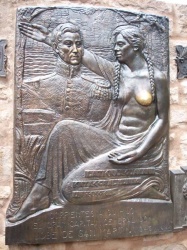
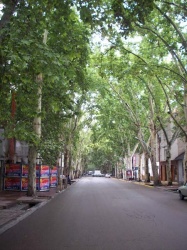
As the sun managed to burn through the clouds, we had to admit the city was a pleasant place. There were streets lined with huge trees, lots of green parks, and plazas with fountains.
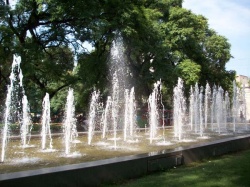
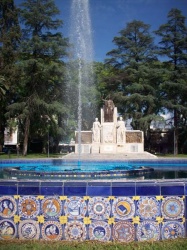
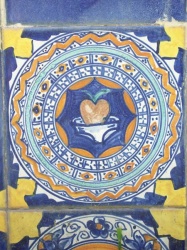
Some of the fountains were adorned with beautiful Spanish painted tiles. Though most of the tiles were decorated with flowers, animals, and other typical decorative subjects, we found one that seemed to show a cryptic pair of underwear with an apple inside.
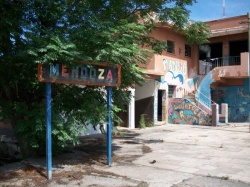
Today, before heading to the bus terminal, we walked a little down the street from our hotel and found the old train station.
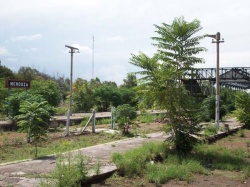
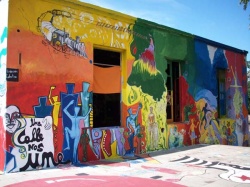
At first it looked like just an old abandoned building. But as we approached, we noticed one side had been painted with murals.
From the pedestrian overpass were hanging sculptures made from scrap metal and found objects.
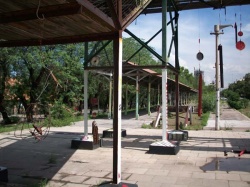
There were paintings on the sidewalks and the stairs. The inside and the outside wall facing the tracks had also been painted.
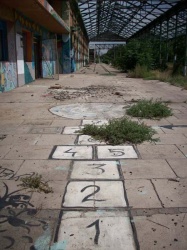
A sign had been created with broken mirror pieces reading "Libertidad de Expresion" There were also signs reading "Casa de Amerika" and squatter symbols.
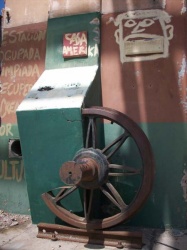
The paintings were colorful and even the letters of the train stop, "Mendoza" had been painted different colors. I imagined how the people who painted it must have had a fun, happy time doing it. But now, if it was squatted, it is abandoned. There apparently was a fire that burned the roof and filled the rooms with piles of charcoal. We found this to be the most interesting cultural site in Mendoza.
Valparaiso: Art in the Street
29 January, 2008, 12:10 am in "Chile"
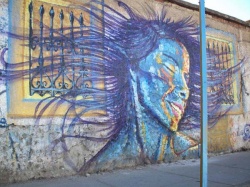
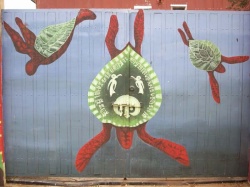 Though the main draw of Alegre and Concepcion Hills are the historic buildings, modern times have brought artists, filling the area with galleries and cafes. However, what really makes the streets come to life is how the past and present are joined through street art.
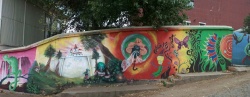
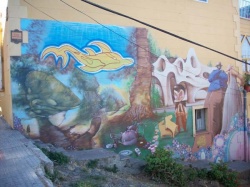
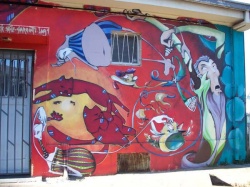
 The hills are full of graffiti art, or rather "underground" murals. Though there is an unfortunate amount of tagging (something I feel is the spray paint equivalent of dogs peeing on things to mark their territory), most of the street art is beautiful and original murals across walls that were originally boring gray concrete.
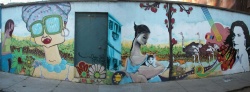
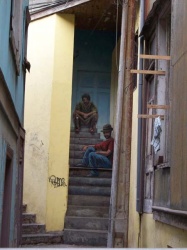
By removing these spots of contemporary city gray and replacing them with whimsical, colorful murals, the artists add more color to the neighborhood, perhaps carrying on the traditions of the original house owners who built their houses and painted them to fill the neighborhood with a garden of color: blooming against the gray coastal fog.
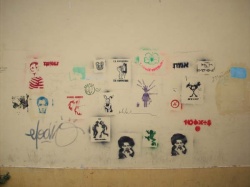
There are also some stencil art, my favorite of which was a monkey head wearing headphones with "mono-stereo" underneath, a multilingual pun on "mono" being the Spanish word for monkey.
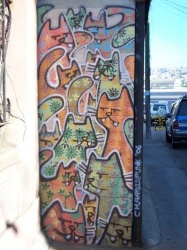
As we admired the murals, we began to recognize the styles of different artists: the cat artist, the artist who did black and white stylized line paintings, the artist who does lots of eyes, and the artists who does figures from odd perspectives.
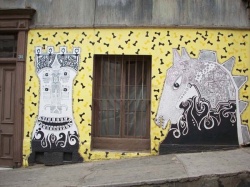
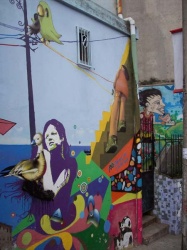
I had to admire the philosophy of the artists who could spend so much time and energy on a piece that once completed was left to the mercies of time: to be covered up, scarred by tags, or sometimes, more interestingly, be added to and altered by other artists. With the last alternative, the work of art seemed to become truly public, a cooperative effort between artists who might not even know each other. The artists also seem to show respect for the historic buildings: mostly the murals seem to end up on dull concrete or abandoned buildings which would otherwise be considered an eye sore.
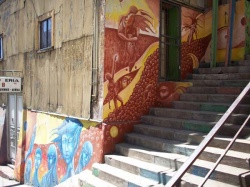
In many places we could see new murals painted over old and some completely reduced to a wall of peeling paint by the weather. The city walls are an ever changing canvas. Maybe in a year this art landscape will be changed completely and the unnamed artists, known only by transient images on walls will be forgotten.
Today we visited the "Open sky museum" a walk around a hill full of commissioned murals, though not without its share of un-commissioned work as well. Here the murals were more abstract with broad swaths of solid color. Some were high on walls (safely out of reach to graffiti artists).
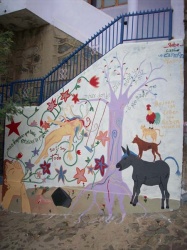
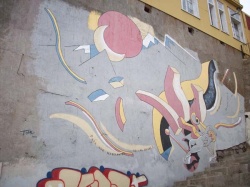
These pieces were more "sophisticated" but I felt they were a bit distant from the life of the streets they were painted in and did not express the vibrancy of the city, as the guerrilla murals did. My favorite piece in the museum was not actually a legit part of it but rather a guerrilla painting of a "bee catcher."
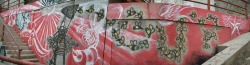
Later a second artist added an angry giant queen bee and other designs, carefully leaving the original painting showing.
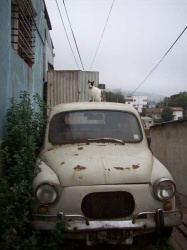
We walked around the hill, past Pablo Neruda's house (a museum that was closed on Mondays), passing a very satisfied looking cat.
As we were walking back down the hill, we heard drumming on metal. It turned out to be the gas delivery truck with one of the delivery guy drumming on the metal gas containers. I think he was whistling too.
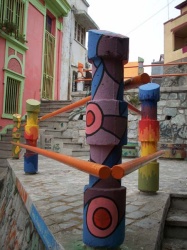
At the bottom of the hill there were some more murals and painted metal poles. The street finished with a little plaza constructed from mosaics.
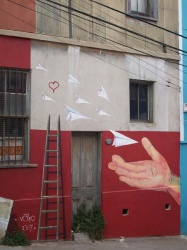
Perhaps some might be offended by the non-historic aspects of the street art, but for me, it really makes the streets special: a contrast between past and present and, in a sense, a quiet introduction of the viewer to the artists who live in the city and what they think, imagine and dream.
Powered by My Blog 1.69. Copyright 2003-2006 FuzzyMonkey.net.
Created by the scripting wizards at FuzzyMonkey.net..
(Code modified by Rowshan Dowlatabadi)
Created by the scripting wizards at FuzzyMonkey.net..
(Code modified by Rowshan Dowlatabadi)